




What Is the Autel EVO Nano+?
Overview and Key Selling Points
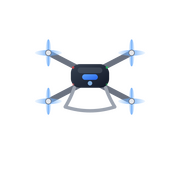
The Autel EVO Nano Plus is a compact, foldable drone built for high-quality aerial photography and video, offering a large sensor and obstacle avoidance in a travel-friendly sub-250g design. At the heart of its appeal are three key differentiators that set it apart from most competitors in the same weight class: a large-format RYYB camera sensor optimized for low-light capture, a tri-directional obstacle avoidance system that was genuinely rare at this weight when it launched, and zero DJI-style geofencing restrictions that lock you out of certain airspace automatically.
The Autel EVO Nano Plus positions itself as a premium option in this class, competing directly with DJI's Mini series by offering a larger sensor, strong low-light performance, and obstacle avoidance that is still rare at this weight. For pilots who have grown tired of DJI's ecosystem lock-in or who simply want a legitimate alternative, the Nano+ checks most of the right boxes.
Who Is the Nano+ Designed For?
If you are comparing sub-250g drones that offer serious camera performance without regulatory friction, this category attracts travelers, content creators, and hobbyists who want high-quality aerial footage in a compact, easy-to-fly package. The EVO Nano+ is designed with a diverse user base in mind. Its compact size and lightweight construction make it particularly appealing to hobbyists and casual users who are looking for a portable drone that is easy to transport and operate. Whether you're hiking, traveling, or simply enjoying a day outdoors, the EVO Nano+ can easily fit in a backpack or even a large pocket.
For professional photographers and videographers, the EVO Nano+ represents a powerful tool that combines portability with high performance. The 50MP camera and 4K video capabilities allow professionals to create stunning content that can elevate their portfolios. That said, it is best positioned for the beginner-to-intermediate pilot who wants a serious step up from a budget toy drone - not a replacement for a full-size professional rig.
Autel Robotics: Brand Background and Reputation
Autel Robotics is a Chinese consumer and commercial aerial drone manufacturer, founded in 2014 and headquartered in Shenzhen, China. The company's inaugural product, the X-Star drone, was released in 2015, marking its entry into the consumer drone market. Autel Robotics was founded with the mission to develop unmanned aerial technologies that empower users across various platforms. Building on this foundation, Autel introduced the EVO series, which quickly gained recognition for its performance and versatility.
Autel Robotics is a relatively newer player in the drone market, but the company has quickly gained a reputation for producing high-quality drones with advanced features at an affordable price point. However, community feedback is a mixed bag - while the hardware earns consistent praise, the overall customer sentiment has at times been negative, with complaints largely revolving around issues with product reliability, poor customer support, and warranty disputes. This is something any serious buyer should weigh carefully before purchasing.
Autel EVO Nano+ Specs and Technical Breakdown
Full Specifications at a Glance
- Weight: 249g (under 250g threshold)
- Sensor: 1/1.28-inch CMOS RYYB, 12.5MP native / 50MP output
- Aperture: f/1.9 fixed
- Video: 4K/30fps, 2.7K/30fps, 1080p/60fps
- Max Video Bitrate: 100Mbps
- Photo Modes: Single, Continuous, AEB, Timer, HDR, RAW (DNG)
- Flight Time: Up to 28 minutes (manufacturer spec)
- Max Range: 10km (FCC) / 5km (CE)
- Transmission System: Autel SkyLink (2.4GHz / 5.8GHz / 5.2GHz tri-band)
- Obstacle Avoidance: Tri-directional (front, rear, downward)
- Wind Resistance: Level 5 (8.5 - 10.5 m/s)
- Gimbal: 3-axis mechanical stabilization
- Max Speed: 15 m/s (Ludicrous mode)
- Storage: MicroSD card slot (up to 256GB)
- Colors: Classic Orange, Arctic White, Deep Space Gray, Blazing Red
Weight, Size, and Portability
Like many competitors of the famous DJI Mini, the Autel EVO Nano+ boasts a very similar design, with its folding arms characteristic of the market leader's mini drones. With dimensions of 142 × 94 × 55mm when folded, the Nano+ is slightly longer and wider than the Mini 2, but remains under the 250-gram mark (249g to be precise) and can still fit in the palm of your hand. Autel also provides a range of attractive color options, including Classic Orange, Deep Space Gray, Blazing Red, and Arctic White, allowing pilots to choose a drone that reflects their style.
Battery Life and Charging Details
The Autel EVO Nano+'s battery has a capacity of 2250 mAh, promising a flight time of 28 minutes according to the manufacturer. In real-world conditions, you should expect closer to 20 - 25 minutes depending on wind, flight style, and temperature. One possible reason why the housing is so lightweight is that the removable battery is hefty at 83g, making up around a third of the overall body weight. The drone doesn't feature a battery cover door on its rear, instead using the battery itself as the cover. The power button and related LEDs are directly built into the battery, allowing you to quickly check battery levels even when not installed in the body of the drone.
Controller and Remote Specs
The Autel EVO Nano+'s remote control is clearly inspired by video game controllers, with its elongated handles ensuring a comfortable grip. Like DJI's RC-N1, this standard remote control without screen features a retractable holder on the top edge for your smartphone. Lightweight and ergonomic, this remote control is easy to use and highly responsive. It does not include a built-in screen; you must use your smartphone running the Autel Sky app for the live feed and controls.
Max Range and Transmission System (SkyLink)
On the transmission side, the remote control uses Autel's SkyLink system, offering a range of 10km for FCC-compliant countries and 5km for European-compliant countries. Autel SkyLink supports 2.4GHz / 5.8GHz / 5.2GHz tri-band. Select dual-band mode in the Autel Sky app, and the connection band between the drone and the remote control will automatically switch between 2.4GHz and 5.8GHz / 5.2GHz depending on the interference situation. In practice, the connection remains stable beyond one kilometer, with no noticeable signal loss. Video feed quality is impressive - 2.7K at 30fps up to 1km, then 1080p - with no perceptible latency.
Camera Performance: 4K RYYB Sensor Explained
What Is the RYYB Sensor and Why It Matters
The Autel EVO Nano+ features a 1/1.28-inch CMOS sensor with a native resolution of 12.5MP, capable of outputting detailed 50MP JPG photos. The sensor utilizes an RYYB (Red, Yellow, Yellow, Blue) color filter array, designed to capture more light than traditional RGGB sensors, which theoretically enhances low-light performance.
What exactly does that mean in practice? Unlike standard RGGB sensors, the RYYB array replaces green pixels with yellow ones, which allows the camera to absorb up to 40% more light. This is not marketing spin - it is a genuine optical advantage that translates into measurably cleaner images in challenging lighting conditions. The RYYB sensor is a real differentiator, not a marketing gimmick, and the flight performance held up better than anticipated for a sub-250g aircraft.
Low-Light Performance and Night Shooting
Night performance is particularly impressive on the Evo Nano+ compared to much of the competition, thanks largely to the 0.8in sensor, wide aperture, and use of RYYB sensor tech, with the latter letting in as much as 40% more light than conventional drone lenses. The camera does a good job at capturing as much light as possible in dim conditions, with streetlights and other ambient lighting providing stunning night-time shots, both in terms of video and photo.
In testing during the "blue hour" just after sunset, the Nano+ produced remarkably clean 4K footage with minimal noise in the shadows. Paired with a wide f/1.9 aperture, this drone is arguably the best low-light performer in the sub-250g category, making it perfect for capturing moody landscapes or twilight cityscapes. The Autel EVO Nano+ fills a specific niche: it's the best sub-250g drone for low-light still photography, thanks to a RYYB sensor that absorbs roughly 40% more light than conventional filters. If you shoot sunsets, cityscapes at dusk, or interiors with mixed lighting, the Nano+ produces stills that the DJI Minis can't quite match.
Video Quality: 4K 30fps and Slow-Motion Modes
For videographers, the Nano+ records stunning 4K video at 30 frames per second (fps), 2.7K at 30fps, and full HD (1080p) at up to 60fps, with a maximum bitrate of 100Mbps. The 4K/30fps ceiling is the Nano+'s most significant video limitation. There is no 4K/60fps mode, which is a notable weakness compared to the DJI Mini 3 Pro. The Mini 3 Pro also boasts a higher bitrate of 150MB/s compared to the Nano+'s 100MB/s, and is capable of producing smoother slow-motion clips with the ability to shoot 1920p at 120fps, while the Nano+ can only achieve 1080p at 60fps. For casual content creation and travel footage, 4K/30fps is more than adequate, but dedicated videographers will feel the constraint.
Photo Modes: HDR, RAW, Panorama
The Nano+ supports an 8-bit Log color profile, offering greater flexibility for color grading in post-production. While its raw (DNG) photo output is 12MP, it allows for more detailed editing. With HDR on, Nano and Nano+ will snap several photos at different exposures and automatically stitch them together, resulting in a photo with more contrast and dynamic range. Additional photo modes include single shot, continuous burst, AEB bracketing, and a self-timer - enough variety for most casual and semi-professional aerial photographers.
Color Science and Post-Processing Flexibility
The RYYB sensor does introduce one known quirk: because yellow pixels replace green, color science can occasionally appear slightly warm or oversaturated straight out of camera, particularly in daylight shots. Colors are vivid and punchy, which most social media creators will love, but photographers who want a more neutral, clinical starting point for post-processing may need to apply a custom picture profile. The Log mode gives you a flatter, more recoverable image for colorists who want to push the footage in post.
Flight Performance and Handling
How Stable Is the Nano+ in Windy Conditions?
In real-world flying, the EVO Nano Plus feels confident and predictable. Take-offs and landings are smooth, and the drone holds position well, even when light wind picks up. This stability makes a noticeable difference when framing photos or filming slow, cinematic shots. That said, in hovering flight, the Nano+ stabilizes well in the face of a few gusts, but its speed in flight is significantly reduced when facing the wind.
Sport Mode and Max Speed
The EVO Nano series is equipped with three flight modes: Smooth, Standard, and Sport (called Ludicrous). The maximum flight speed of Smooth mode is 5m/s; Standard mode tops out at 10m/s; and in